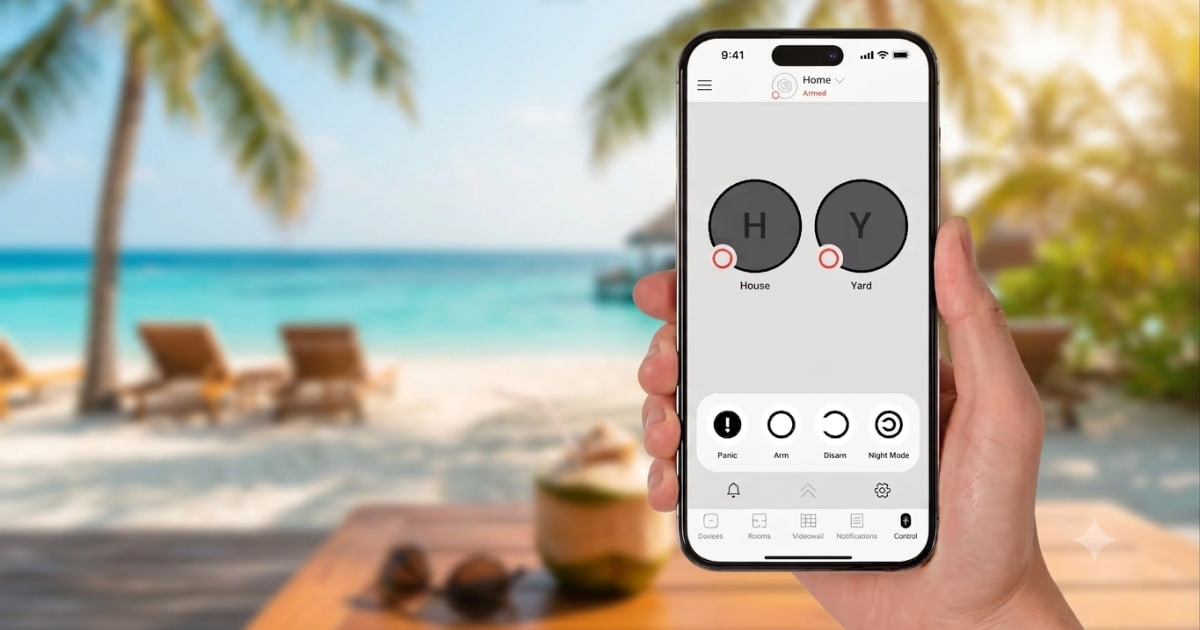
July 2, 2026

Vacation Home Security Checklist: How to Protect Your Home Before Travel

Vacation Home Security Checklist: How to Protect Your Home Before Travel

Protecting your home before vacation starts before you lock the front door. The strongest vacation security plan combines simple travel habits, secured entry points, smart lighting, intrusion detection, cameras, leak detection, fire and CO alerts, app control, and professional monitoring options when appropriate.

A home that sits empty for several days can create risks that are easy to miss: a side door left unlocked, a package sitting outside, a water leak under the laundry room sink, a router outage that limits Wi-Fi cameras, or an alarm notification that no one sees while traveling. That is why vacation home security should not rely on one device. It should be built in layers.

ASPEX Secure designs, installs, supports, and monitors professional Ajax security systems for homes in Houston and across the United States. A professionally designed setup can be built around your property layout, entry points, cameras, environmental risks, access needs, and monitoring preferences.

Quick Vacation Home Security Checklist

Before leaving for vacation, use this checklist to reduce obvious risks and confirm your security system is ready:

  1. Pause mail and package deliveries or ask someone trusted to collect them.
  2. Lock all doors, windows, garage doors, gates, sheds, and side entrances.
  3. Use realistic lighting schedules instead of leaving one light on all week.
  4. Avoid posting real-time travel updates publicly.
  5. Arm your security system and confirm every protected zone works.
  6. Test camera views during the day and at night.
  7. Check sensor battery status in the app.
  8. Confirm app notifications are reaching the right people.
  9. Verify monitoring status if your system is professionally monitored.
  10. Place leak detection near water-risk areas.
  11. Review fire, smoke, heat, and CO alert coverage.
  12. Create temporary access for trusted people instead of sharing your main code.
  13. Confirm backup communication if your system supports cellular backup.
  14. Remove ladders, tools, and objects that could help someone reach a window.
  15. Make sure someone knows what to do if an alarm occurs while you are away.

The goal is not to make your home look locked down like a fortress. The goal is to create a calm, reliable security plan that detects real events, sends useful alerts, and gives the right people a clear way to respond.

Start With the Obvious Signs That You Are Away

Many vacation security problems begin with visible clues. Before leaving, avoid making the home look empty.

Pause mail and package deliveries. Ask a trusted neighbor, family member, or house sitter to remove flyers, check the porch, and look for anything unusual. Keep normal routines in place when possible, such as lawn service, trash pickup, or exterior maintenance. A home that suddenly looks neglected can attract attention.

Be careful with social media. Posting vacation photos in real time may tell people that the home is empty. It is safer to share trip updates after you return or with a limited private audience.

Smart lighting can help, but it should look natural. A porch light that stays on all day can be as obvious as a completely dark house. Use evening schedules, varied indoor lighting, and motion-based exterior lighting where your automation setup supports it.

For Houston-area homeowners, vacation security should also consider storms, heat, humidity, power interruptions, internet outages, garage access, side gates, and water-risk areas such as laundry rooms, water heaters, HVAC drains, and second-floor plumbing. A professionally designed system should reflect how the property actually works, not just how many doors it has.

Protect Doors, Windows, and Garage Access First

Most vacation security plans should begin with entry points. Front doors, back doors, side doors, sliding doors, first-floor windows, garage doors, and the door between an attached garage and the home should all be reviewed before travel.

For an Ajax-based system, a professional installer may use Ajax DoorProtect on doors and windows to detect unauthorized openings when the system is armed. For areas where shock or tilt detection matters, such as certain windows, sliding doors, or garage-related applications, Ajax DoorProtect Plus may be considered because it can add shock and tilt sensing.

Good installation matters. A professional installer does not simply place contacts everywhere. They check how the door opens, where the magnet should sit, whether the frame is metal, how the device communicates with the hub, and how the zone should be named in the app.

Zone names are more important than many homeowners realize. When you are away, “Back Door Opened” is much more useful than “Sensor 04.” Clear names help you, your family, and monitoring professionals understand what happened faster.

For a vacation-ready setup, entry protection should answer three questions:

  • Which doors or windows are most likely to be used for entry?
  • Which areas need instant alerts when the system is armed?
  • Who receives the alert, and what should they do next?

ASPEX Secure can help with professional security system installation so entry sensors, app alerts, sirens, and monitoring options are configured around the actual layout of the home.

Ajax door and window security sensor installed near a garage entry to help protect access points in a smart home security system.

Use Motion Detection to Confirm Real Activity

Door and window sensors tell you when an entry point opens. Motion detection helps identify movement inside or around protected areas after the system is armed.

For indoor spaces, Ajax MotionProtect can be used in practical traffic paths such as an entry hall, main living area, basement access, or interior route from the garage. Placement matters. Motion detectors should not be aimed at heating vents, moving curtains, reflective surfaces, or areas where pets are likely to create unnecessary alerts.

For stronger alarm context, Ajax MotionCam can provide photo verification when motion is detected. This can be especially useful in areas where visual confirmation matters, such as a foyer, hallway, or main approach path. It should not be placed in private spaces where homeowners would not want images captured.

For more detail on how visual context can reduce unnecessary alerts, read our guide to photo verification and false alarms.

For outdoor areas, Ajax MotionProtect Outdoor may be useful around driveways, side yards, gates, detached garages, or exterior approach paths. Outdoor motion detection should be professionally planned because trees, animals, sunlight, vehicles, and neighbor activity can cause poor alert quality if detection zones and placement are not configured correctly.

The best motion detection setup does not create constant noise. It creates useful alerts that help confirm whether something real is happening.

Ajax motion detection sensor installed inside a home to help confirm real activity as part of a professionally designed security system.

Use Cameras for Visibility, Not as the Whole Security Plan

Security cameras are useful while you are on vacation because they let you check the home remotely and review what happened. But cameras alone are not a complete home security system.

A strong camera plan focuses on useful views:

  • Front door
  • Driveway
  • Garage
  • Back door
  • Side gate
  • Backyard access
  • Detached structures
  • Package delivery areas
  • Main approach paths

For Houston-area camera placement examples, see ASPEX Secure’s guide on where to place security cameras around a home.

Cameras should capture faces, vehicles, doors, and movement paths — not just a wide view of the street, sky, or driveway edge.

For an Ajax-based video setup, a professional system may include Ajax DoorBell for front-door visibility, Ajax IndoorCam for selected interior views, and compatible outdoor camera coverage depending on the property design. Camera selection should depend on the location, lighting, recording needs, network setup, privacy preferences, and how the camera supports the overall alarm workflow.

Before leaving for vacation, check:

  • Camera lenses are clean.
  • Daytime and nighttime views are useful.
  • Motion zones avoid trees, road traffic, and reflections.
  • Recording or storage is working.
  • App access is working for the right users.
  • Camera alerts are not so noisy that you start ignoring them.
  • Network equipment has backup power if needed.
  • Exterior cameras are aimed at real approach points, not empty space.

Cameras work best when they support intrusion detection, app alerts, sirens, and professional alarm monitoring options. They provide visibility, but sensors and monitoring create the response workflow.

Outdoor security camera installed on a home to provide visibility as part of a complete security plan with intrusion detection and monitoring options.

Do Not Forget Fire, CO, and Water Leak Risks

A vacation security checklist should protect more than doors and windows. Many expensive problems happen when no one is home to notice smoke, carbon monoxide, high heat, humidity, or water leaks.

For an Ajax-based system, Ajax FireProtect 2 may be used for smoke, heat, and carbon monoxide alerts depending on the model, property needs, and installation requirements. Fire and life-safety devices should always be planned carefully and should not be treated as a replacement for code-required fire systems or local life-safety requirements.

For leak risks, Ajax LeaksProtect can be placed near areas where water problems often start:

  • Washing machine
  • Water heater
  • Dishwasher
  • Under sinks
  • Basement areas
  • HVAC drain lines
  • Utility rooms
  • Plumbing equipment
  • Second-floor bathrooms
  • Refrigerator water lines

For stronger water control, Ajax WaterStop may be paired with leak detection to help shut off water automatically when the system design and plumbing configuration support it. This can be especially valuable before travel because water damage often becomes worse when nobody is home to notice the first leak.

For indoor environmental awareness, Ajax LifeQuality can monitor temperature, humidity, and CO₂. For vacation use, temperature and humidity visibility may be helpful in homes with basements, mechanical rooms, climate-sensitive spaces, or areas where Houston heat and humidity can create comfort or property concerns.

Ajax water leak detector installed near a kitchen dishwasher and plumbing area to help alert homeowners about water leak risks as part of a smart security system.

Prepare Access for Trusted People

Before leaving, decide who can enter the home and how. A neighbor, family member, cleaner, pet sitter, or house sitter should not need your main security code forever.

With Ajax KeyPad TouchScreen, a system can support convenient control options such as codes, Pass cards, Tag key fobs, and smartphone-based access depending on configuration. A professional setup can help create separate users or temporary access instead of sharing one permanent code with everyone.

Temporary access is especially useful when:

  • A pet sitter needs to enter daily.
  • A neighbor may check the house after a storm.
  • A family member needs emergency access.
  • A cleaner has a scheduled visit while you are away.
  • A trusted person may need to respond to an alarm.

For homes where someone will stay behind, check in regularly, or may need emergency help, Ajax Button can be configured as a panic button or smart button depending on the system design. It should be placed where the person can realistically reach it, not hidden in a drawer.

Good access planning prevents two common problems: people setting off false alarms because they do not know how to disarm the system, and homeowners sharing one permanent code that never gets removed.

Make Sure Alerts Can Still Reach Someone

The most common vacation security weakness is not always a missing sensor. It is the lack of a response plan.

Before you leave, confirm:

  • Who receives app alerts.
  • Whether emergency contacts are updated.
  • Whether professional monitoring is active if included.
  • Whether the system has backup communication.
  • Whether someone local can check the property if needed.
  • Whether the person receiving alerts knows what to do.

A system that depends only on Wi-Fi may become limited if the home internet goes down. A professionally configured Ajax security system can support app control, battery-powered devices, and backup communication depending on the hub model, cellular signal, monitoring setup, and property design.

For example, Ajax Hub 2 Plus can support multiple communication channels, including Ethernet, Wi-Fi, and cellular options depending on configuration. Actual performance depends on the installed equipment, signal quality, subscription, and monitoring setup, so it should be reviewed before an extended trip.

If professional alarm monitoring is included, confirm that the account, emergency contacts, address, and response instructions are correct before you travel. Monitoring is most useful when the alert does not depend only on you noticing a phone notification while you are on a flight, driving, sleeping, or in a different time zone.

7 Days Before Vacation

About a week before leaving, walk the home with your security system in mind.

Check whether every main entry point is protected. Review areas that may need leak detection. Test camera views at night. Confirm that app access works for all required users. Make sure batteries are not low. If you use professional monitoring, confirm your account status and emergency contact details.

This is also the right time to request help if something is missing. Waiting until the night before travel may not leave enough time to add sensors, adjust cameras, replace batteries, or review monitoring settings.

24 Hours Before Vacation

The day before travel, focus on the practical items.

Pause deliveries, secure outdoor items, lock sheds and gates, remove visible tools or ladders, and confirm that exterior lighting works. Make sure trusted people know how to access the home and what to do if an alarm occurs.

Open the Ajax app and review the system status. Check that doors and windows report correctly. Confirm that cameras are online. Test notifications. Review any system warnings instead of ignoring them.

Right Before You Leave

Before pulling out of the driveway, do one final check.

Make sure all doors and windows are closed. Confirm the garage is fully shut. Arm the system. Check that the system status changes correctly in the app. Look at the porch, driveway, and side gate. Make sure no package, tool, ladder, or visible clue makes the home look unattended.

If someone will enter while you are away, confirm they have the correct access method and understand how to use it.

What a Professionally Designed Vacation Security Setup Can Include

A professional vacation-ready home security system can include:

  • Ajax DoorProtect for doors and windows
  • Ajax DoorProtect Plus where opening, shock, or tilt detection may be useful
  • Ajax MotionProtect for key interior movement paths
  • Ajax MotionCam for photo verification in appropriate areas
  • Ajax MotionProtect Outdoor for selected exterior zones
  • Ajax DoorBell for front-door visibility
  • Ajax IndoorCam for selected indoor viewing needs
  • Outdoor camera coverage for driveways, side gates, backyards, and detached structures
  • Ajax FireProtect 2 for smoke, heat, and CO alert coverage where appropriate
  • Ajax LeaksProtect near plumbing and water-risk areas
  • Ajax WaterStop for compatible automatic water shutoff
  • Ajax LifeQuality for temperature, humidity, and CO₂ awareness
  • Ajax KeyPad TouchScreen for convenient system control and user access
  • Ajax Button for panic or smart-button use cases
  • Ajax Hub 2 Plus or another appropriate Ajax hub depending on system design
  • App control and user permissions
  • Backup communication where supported
  • 24/7 professional monitoring options

The right setup depends on the home. A townhome, single-family home, large property, vacation property, rental home, or Houston-area home with a detached garage may all need different coverage.

Are Cameras Enough While You Are on Vacation?

Cameras are helpful, but cameras alone are usually not enough for vacation security.

A camera may show what happened, but it does not always detect entry, trigger a siren, notify a monitoring center, or create a reliable response workflow. A stronger plan combines camera visibility with door and window sensors, motion detection, fire/CO alerts, leak detection, app notifications, and a monitored alarm system when appropriate.

The best setup helps answer four questions:

  1. What happened?
  2. Where did it happen?
  3. Who needs to know?
  4. What happens next?

That is where a professionally designed security system becomes more valuable than a camera-only setup.

Final Pre-Trip Checklist

Before leaving for your vacation, walk the property once with the system in mind.

Arm the system and confirm every protected door and window reports correctly. Test cameras during the day and at night. Check battery status in the app. Confirm monitoring status if your system is monitored. Make sure leak-prone areas have detection where needed. Remove ladders, tools, and objects that could help someone access a window. Lock gates, sheds, and garage doors. Give temporary access only to people who need it.

The goal is not to eliminate every possible risk. The goal is to reduce obvious weaknesses, detect real events early, and make sure alerts reach someone who can respond.

ASPEX Secure designs, installs, supports, and monitors professional Ajax security systems for homes and businesses in the United States, with local service in Houston and surrounding areas. If you are preparing for travel, ASPEX Secure can help review your layout, entry points, cameras, monitoring needs, and environmental risks before you leave.

Prepare Your Home Before Your Next Vacation

Planning a trip? ASPEX Secure can design a professional Ajax security system around your home’s entry points, camera coverage, water-risk areas, fire/CO alert needs, app control, and monitoring options.

Request a professional security assessment and make sure your home is ready before you travel.

Frequently asked questions

Can a home security system work during internet or power outages?
Is a monitored alarm system more secure than cameras alone?
What type of properties benefit most from monitored alarms?
What should I do to prepare my security system before leaving for vacation?
Which Ajax devices are useful before vacation?
Should I leave lights on while I am away?
Where should leak detectors be placed before a trip?
Can I give temporary access to a pet sitter or neighbor?

Latest articles