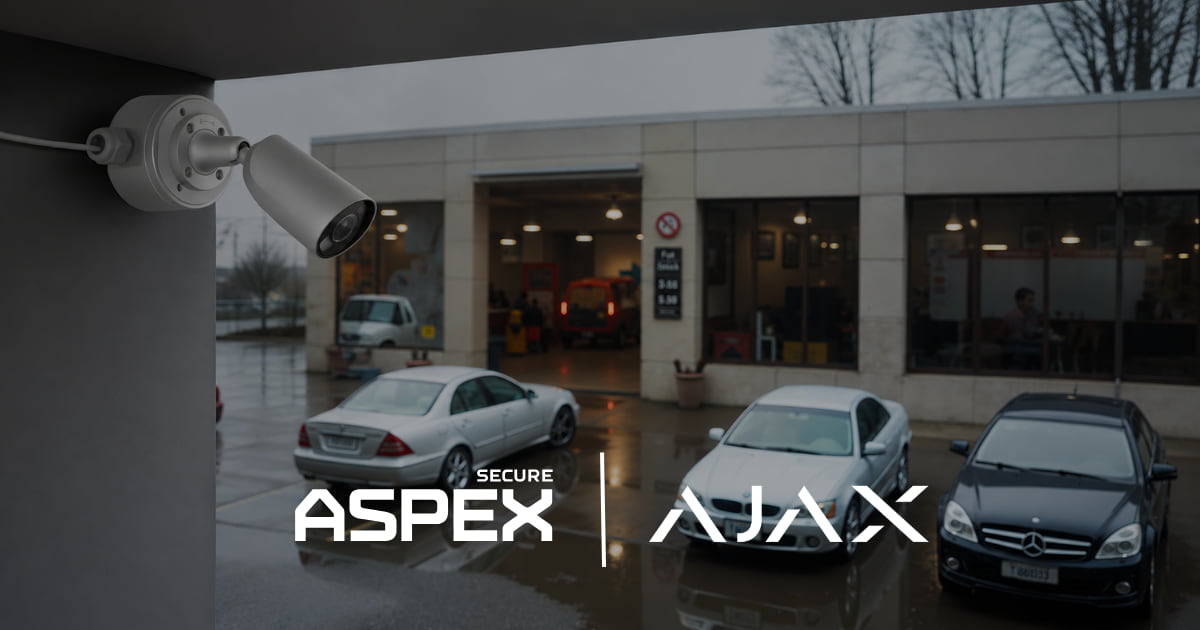
Parking lot security camera planning for Houston businesses should begin with the footage an incident review would actually need: a clear route through the lot, useful views at vehicle entrances and exits, pedestrian activity, and nighttime detail under real lighting. A camera may detect or record a vehicle without producing a readable plate or identifiable face, so those must be treated as separate design goals.
What Should a Parking Lot Camera Plan Accomplish?
A useful plan defines what the business needs to see, where that detail can realistically be captured, and how the recording will be found and exported after an event.
Face or plate detail should never be assumed from resolution alone or promised before the angle, lens, lighting, distance, and vehicle speed have been tested.
Where Should Parking Lot Security Cameras Be Positioned?
Vehicle Entrances and Exits
Entrances and exits are valuable because vehicles follow a predictable route and may slow down. An overview camera can document the vehicle, direction, and surrounding context. If readable plate detail is required, it may need a separate, tighter view rather than one wide camera expected to do both jobs.
Avoid aiming the lens directly into headlights, sunrise, sunset, or a bright fixture. Ajax installation guidance also recommends keeping the intended target visible long enough for object detection and avoiding steep angles or obstructions. Those conditions may improve vehicle detection, but they do not guarantee a readable plate.
Vehicle and Pedestrian Routes
Coverage should follow how people move between parking spaces, walkways, and the business. A camera may lose a person behind trucks, trees, signs, columns, or parked cars, so the plan should account for the lot when it is busy - not only when it is empty during installation.
Where practical, adjacent views can overlap at key transitions so a reviewer does not lose the subject between parking sections.
Remote Rows, Corners, and Visual Obstructions
Remote rows may have different lighting, mounting, power, and network conditions from areas near the building. Landscaping, signs, poles, and frequently parked large vehicles can create blind spots that should be documented before mounting locations are approved.
The parking lot layout depends on sight lines, target detail, mounting points, lighting, and recording goals - not square footage alone. Broader building needs belong in a separate commercial security system plan.
Facilities that also need to coordinate loading docks, interior alarm areas, users, communication, and monitoring can use the broader warehouse security planning guide.
Why One Wide View Is Not the Same as an Evidence View
A wide view provides context, but people and vehicles within it appear smaller. A narrower or varifocal view can provide more detail at a selected point but covers less of the scene. Ajax’s guide to camera focal length explains this tradeoff.
The practical strategy is to separate roles: use overview views to reconstruct movement and targeted views where more detail is required. More megapixels do not correct a poor angle, excessive distance, motion blur, glare, or a target that is too small in the frame.
How Does Lighting Affect Parking Lot Evidence?
Headlights, dark spaces between fixtures, reflective signs, wet pavement, and deep shadows make parking lots difficult night scenes. A camera that looks acceptable at noon may produce glare, washed-out subjects, or motion blur after dark.
Ajax advises installers to keep direct light out of the lens, account for reflective surfaces such as wet roads, prevent nearby objects from reflecting infrared light into the camera, and use WDR where lighting varies. Depending on the model, Ajax cameras may include smart infrared illumination, True WDR, or hybrid infrared and white-light illumination. These features support night imaging, but useful detail still depends on the complete scene.
Commission the system at night with the normal lot lights on. Test vehicles from each direction, headlights facing the camera, people in bright and dark areas, typical occupancy, and wet or reflective pavement when practical.
What Can Ajax AI Recognition Do in a Parking Lot?
Supported Ajax cameras use onboard AI to distinguish categories such as people, vehicles, and pets. Activity zones and sensitivity settings can focus detection on meaningful parts of the frame and reduce irrelevant events. Ajax emphasizes that placement, tilt, object size, visibility, lighting, weather, and time in the frame affect performance in its AI camera installation guide.
Object classification is not the same as identifying a person, performing facial recognition, or reading a license plate. The verified capability should be described as person or vehicle detection unless a separate plate- or detail-capture design has been selected and field-tested.
What Makes Recorded Video Useful After an Incident?
Evidence planning includes the recorder and review process. Before installation, the business should define:
- whether critical views record continuously, by event, or through a combined strategy;
- how much video history operations actually require;
- who can view, download, and share footage;
- whether the camera, recorder, and app display the correct time;
- how an incident clip will be exported with useful footage before and after the event; and
- what happens to recording, alerts, and remote access during a network or power interruption.
To plan the review window for damage or incidents discovered later, use our security camera footage retention guide to connect recording settings, storage capacity, and overwrite behavior.
Ajax camera and NVR configurations can support archive review and video downloads, depending on the devices, storage, permissions, and recording setup. Test the export workflow before an incident. No camera design can guarantee an identifiable person, a readable plate, or footage that meets every investigative or legal requirement.
Parking Lot Camera Commissioning Checklist
Before final approval, test the planned views:
- during daylight, dusk, and full darkness;
- with headlights approaching from each vehicle direction;
- with the lot empty and normally occupied;
- with people and vehicles at the actual target distances;
- for blind spots created by landscaping, signs, poles, and large vehicles;
- for detection zones, sensitivity, recording, time, storage, permissions, and export; and
- during a controlled internet interruption, where appropriate, to confirm which functions remain available.
Plan Parking Lot Camera Coverage With ASPEX Secure
ASPEX Secure designs and installs professional parking lot security cameras for Houston businesses around real vehicle routes, pedestrian movement, lighting, mounting conditions, recording needs, and evidence goals. As an Ajax Systems Authorized Partner, ASPEX Secure can integrate supported video devices with a professionally configured commercial security system when the property requires more than cameras alone.
Explore professional security camera installation in Houston or request a custom assessment for your business.