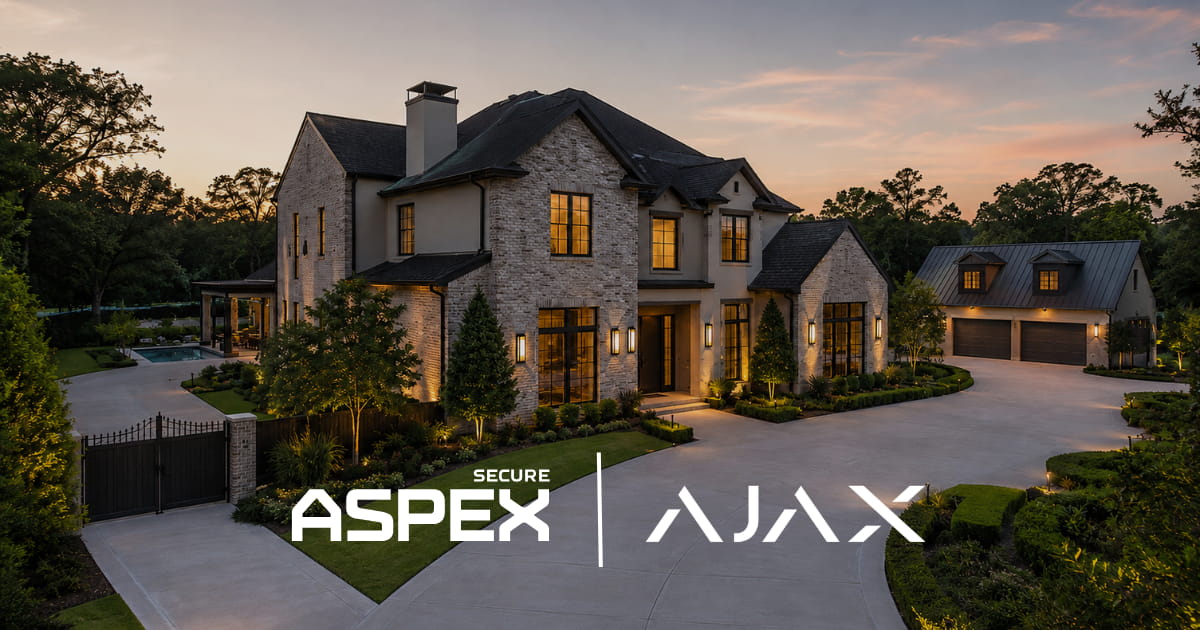
Ajax can support a large or complex Houston home when the system is designed around the property's layout, construction, entry points, detached buildings, daily routines, and tested communication coverage. The goal is not simply to add more devices. It is to create clear security layers, practical arming modes, useful visual context, resilient communication, and a response plan the household can use consistently.
ASPEX Secure designs professional home security systems in Houston around the property instead of relying on a standard package or a device count based only on square footage.
What Makes a Large Home Security Plan Different?
A large home is not defined by one square-foot threshold. A compact multi-story house may be easier to cover than a smaller property with long wings, reinforced walls, a detached garage, multiple gates, and outdoor areas.
The real variables are distance, construction materials, entry points, sightlines, routines, and users. The main house, garage, guest house, perimeter, and selected interior rooms may need different devices, arming rules, and permissions.
That is why professional security system installation should begin with the property and the required outcome-not with a preselected equipment bundle.
Start With a Property and Risk Map
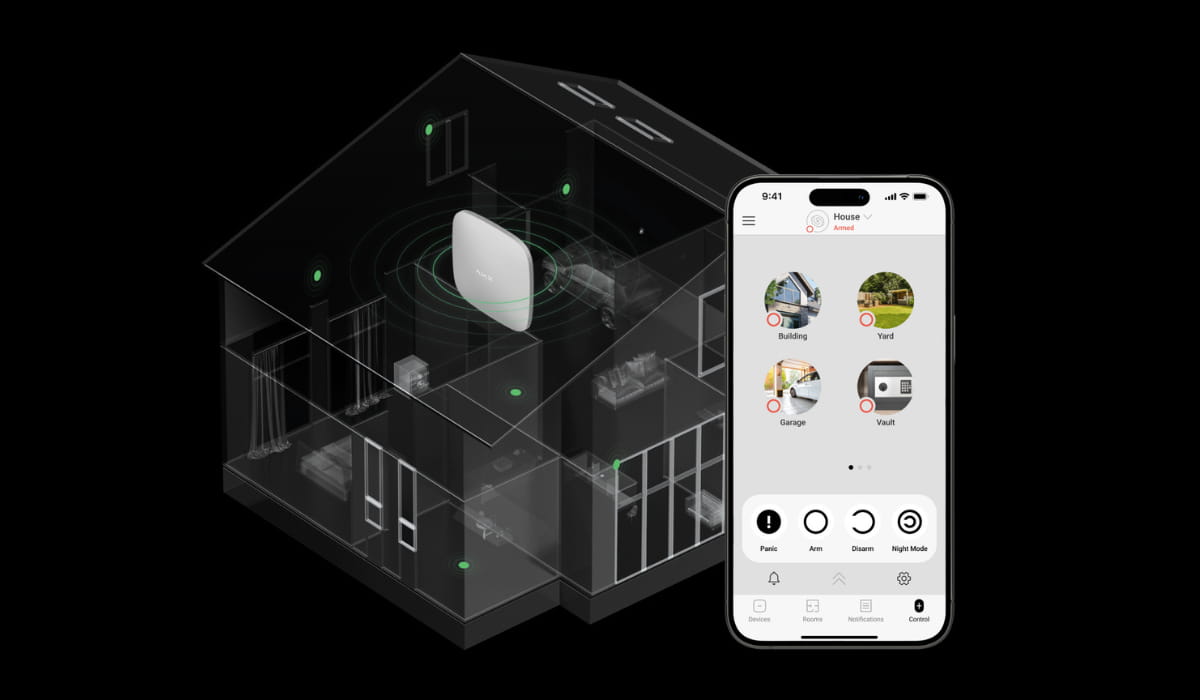
The first step is a walk-through of how people can approach, enter, and move through the property. The assessment should review:
- the front entrance, service entrance, garage access, patio doors, and other exterior doors;
- accessible windows, large glass areas, balconies, and second-story access opportunities;
- the driveway, vehicle gate, side paths, backyard approaches, and fence openings;
- detached garages, guest houses, workshops, pool houses, and outdoor equipment areas;
- rooms containing vehicles, collections, equipment, documents, or other items requiring additional control;
- family routines, pets, visitors, cleaners, contractors, and household staff;
- existing alarm wiring, cameras, network equipment, gate controls, and backup power.
Not every opening needs the same device, and not every outdoor area needs an alarm. Prioritize realistic approach paths and decide which events require detection, visual context, a siren, an app alert, or a monitoring workflow.
For a practical way to turn that assessment into an equipment list, see our guide to how many security sensors a home needs.
Build Layered Intrusion and Perimeter Protection
A large-home security system works best in layers. Exterior detection can provide earlier awareness along selected approaches. Door and window sensors identify protected openings. Glass-break detection may support appropriate glazed areas, while indoor motion detection adds coverage if someone moves beyond the perimeter.
For a closer look at selecting broad-area, curtain-style, and photo-verification detection around driveways, gates, side passages, and yards, see our guide to Ajax outdoor and perimeter security design.
For supported alarm events, Ajax MotionCam detectors can add a series of still images to the alarm notification. This is different from a security camera: photo verification provides focused context for a detector event, while cameras may provide live viewing and recorded video based on the installed configuration. The two can complement each other without asking either one to perform every job. Our guide to false alarms and photo verification explains this distinction in more detail.
Clear device and zone names also matter. “Garage side door” and “guest house rear motion” are more useful during an alarm than generic labels such as “Zone 12.”
Test Communication Across Floors and Detached Buildings
Published open-space range figures do not prove coverage inside a finished home. Floors, masonry, reinforced concrete, metal, equipment, distance, interference, and hub placement can all affect communication.
For a large property, the installer should test the proposed hub location and every intended device position before finalizing the design. Systems with photo verification also need the photo-transmission path checked, not only the alarm signal. If testing identifies a weak or unstable area, the design may require revised hub placement, a compatible Ajax range extender, or a different wired or hybrid system architecture.
Detached buildings should be tested individually. A garage that appears close to the house may still be difficult to reach because of exterior walls, metal doors, equipment, or the position of the hub. ASPEX Secure selects the appropriate Ajax security system components only after reviewing the actual project requirements and final installation locations.
Give Every Camera a Defined Job
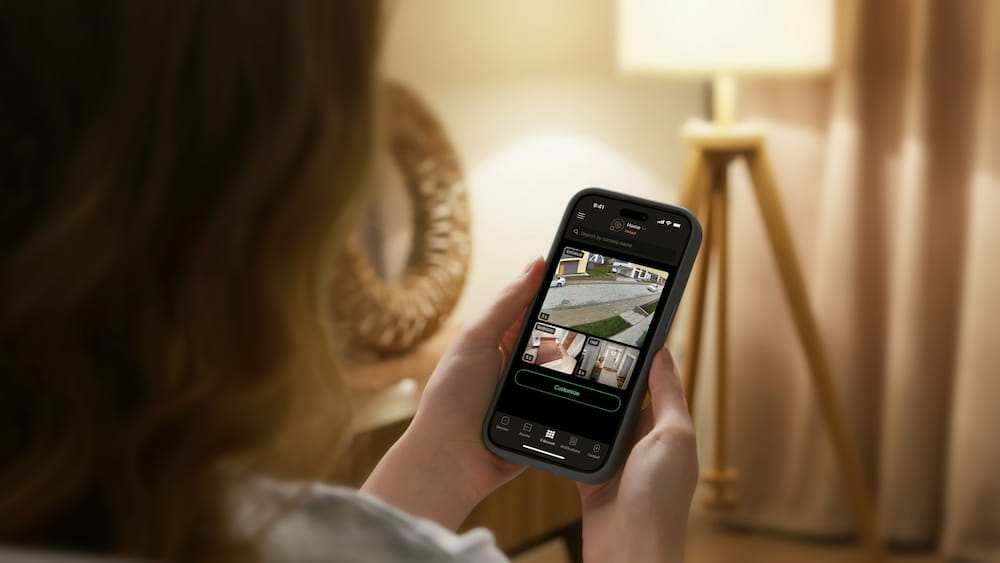
A camera plan should begin with an evidence goal. One view may show activity across a driveway, while another captures more useful detail at a gate or entrance. A wide overview cannot provide identification-quality detail everywhere.
Priority views commonly include vehicle and pedestrian approaches, entrances, side gates, detached buildings, and exterior travel paths. Test final positions in daylight and under normal nighttime lighting for glare, shadows, obstructions, and useful detail. Cameras do not automatically prevent crime, and face or plate capture should not be promised until the angle, distance, lighting, lens, and settings have been field-tested.
See the detailed guide to security camera placement around a Houston home, or review ASPEX Secure's professional security camera installation options for a property-specific video plan.
Make Daily Security Simple for the Household
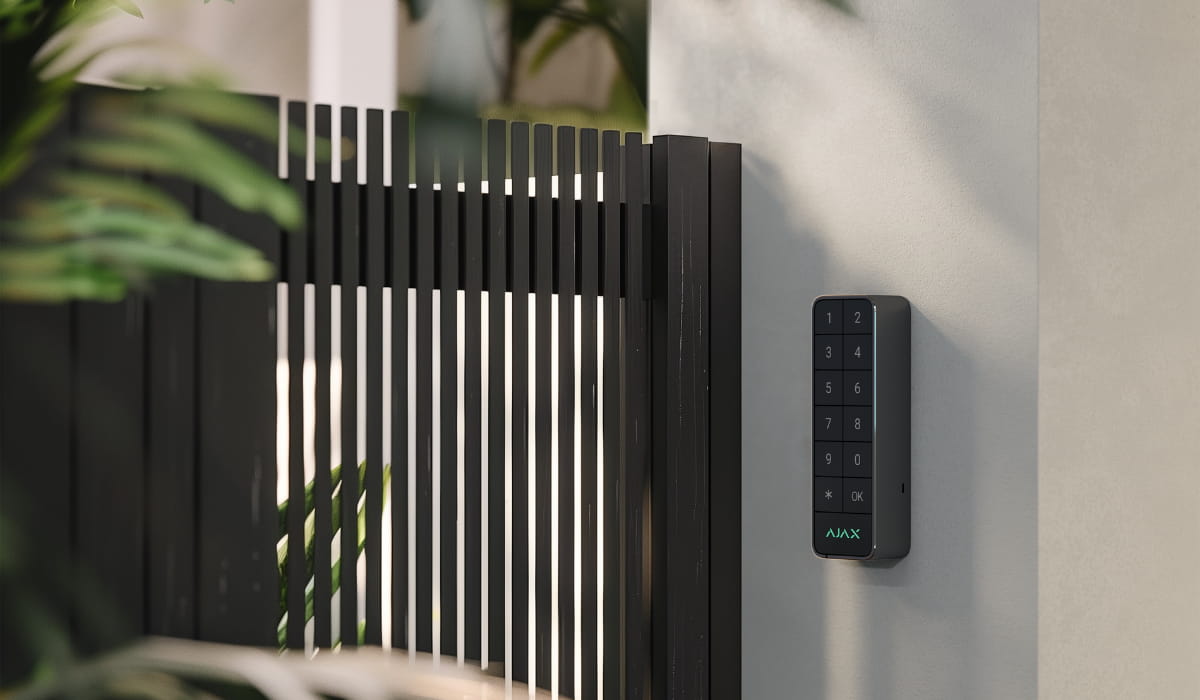
Complex coverage should not create a complicated daily routine. The system should support the way the household actually lives:
- full-property arming when everyone is away;
- Night mode for selected perimeter and interior areas while the home is occupied;
- separate groups where the main house, garage, guest area, or another section needs independent control;
- individual app accounts or personal keypad codes instead of shared credentials;
- appropriate video and system permissions for each user;
- removal of staff or contractor access when it is no longer required.
Supported Ajax configurations can also provide access codes for people who do not need an app account. Scheduled access may be available with compatible access devices, passes, tags, codes, hubs, and software configurations. These options should be confirmed for the selected equipment rather than assumed.
Before handoff, each person should know which mode to use, which areas it controls, how entry and exit delays work, and who should receive which notifications.
Plan for Life Safety, Outages, and Alarm Handling
Life Safety and Water Risks
A complete design may include compatible smoke, heat, carbon monoxide, and water-leak detection based on the home, selected products, and applicable requirements. A professionally configured automation scenario can automatically close an Ajax WaterStop when Ajax LeaksProtect detects water. An integrated security system is not a substitute for required code-mandated life-safety equipment.
Power and Communication Interruptions
Outage planning also requires more than checking whether the hub has a battery. Depending on the selected Ajax hub and configuration, backup power and cellular communication can help support essential alarm functions during certain interruptions. Battery-powered detectors may continue operating while powered cameras, network switches, routers, PoE equipment, and recorders require their own backup plan.
Review the expected behavior of alarms, app access, monitoring signals, cameras, and recording separately and test it where practical. Read more about security system behavior during Houston power and internet outages.
App Alerts and Professional Monitoring

App alerts give authorized users direct information about the system, but they still depend on someone noticing and acting on the notification. Professional alarm monitoring adds a defined event-handling workflow when the homeowner is asleep, traveling, unavailable, or unable to review an alert.
For a large property, the monitoring setup should include accurate zone names, current contacts, appropriate permissions, available verification data, and clear event instructions. Event handling and response depend on the equipment, service, configuration, and applicable procedures. No system or monitoring plan can guarantee dispatch, emergency response, or prevention of loss.
Large-Home Commissioning Checklist
Before the system is finalized, verify that:
- the property, entry points, approach paths, and detached buildings were reviewed;
- every detector was tested in its final position;
- alarm and photo-transmission strength was checked where applicable;
- outdoor detection areas match the intended routes and normal property activity;
- cameras cover their assigned evidence goals during the day and at night;
- devices and zones have clear names;
- full-property, Night, and any separate group modes match household routines;
- family, staff, and contractor permissions are correct;
- backup power and communication behavior was reviewed for alarms, network equipment, cameras, and recording;
- app, siren, notification, and monitoring workflows were tested as applicable;
- the homeowner received training and knows how to request future changes.
Plan the System Around the Property
Ajax can support a large or complex Houston home, but suitability depends on the correct hub, compatible equipment, communication testing, thoughtful placement, and a configuration the household can use consistently.
ASPEX Secure is an Ajax Systems Authorized Partner serving Houston and surrounding areas. We design, install, configure, support, and offer monitoring options for professional residential security systems. Request a Free Home Security Check to build a plan around your home's layout, detached areas, users, cameras, outage needs, and response priorities.