Open the alarm panel in a typical 20-year-old Houston home and you'll often find the same picture: a zone labeled "rear door" that leads to a wall removed during a renovation, three motion detectors sharing one zone, and a control panel that can't send a single notification to your phone. The panel is obsolete - but much of the wiring behind it is still worth keeping.
An old wired alarm system can be modernized without opening finished walls or rewiring the property. After professional testing, compatible wired detectors connect to a modern Ajax security system through an integration module, while unreliable components are replaced. The result is a hybrid system: existing wiring where it works, new wireless devices where coverage is missing. A typical residential retrofit is completed in one day. A full rip-and-replace with new wiring in a finished home takes two to three days and requires wall access.
An Old Alarm Panel Does Not Mean the Entire System Is Obsolete
Most aging alarm systems share the same problem: the wiring and many detectors still function, but the control panel no longer does what the owner needs.
The old panel lacks:
- Mobile app control
- Clear event history
- Individual device notifications
- Cellular backup communication
- Modern alarm monitoring compatibility
- Remote user management
- Photo verification
- Automation
- Simple expansion with new devices
Replacing every door contact, motion detector, siren, and cable to fix a panel problem creates unnecessary labor and disruption. The right first step is to separate the condition of the alarm panel from the condition of the field devices and wiring. A control panel can be obsolete while the equipment connected to it remains perfectly usable.
Walk Your Property the Way a Burglar Would
Before deciding what to keep, look at what the old system actually protects.
Walk the property the way an intruder would: which door has no contact, which first-floor window sits hidden from the street, where does the old system go blind? Older installations were designed around minimum perimeter protection - the front door, the back door, one or two motion detectors. Intruders know that. Your property may now have a converted garage, a home office, a side entrance, or a detached structure the original system never covered.
Those gaps matter as much as the condition of the old equipment. A retrofit should fix coverage, not just swap the panel.
What Parts of an Existing Wired Alarm Can Be Reused?
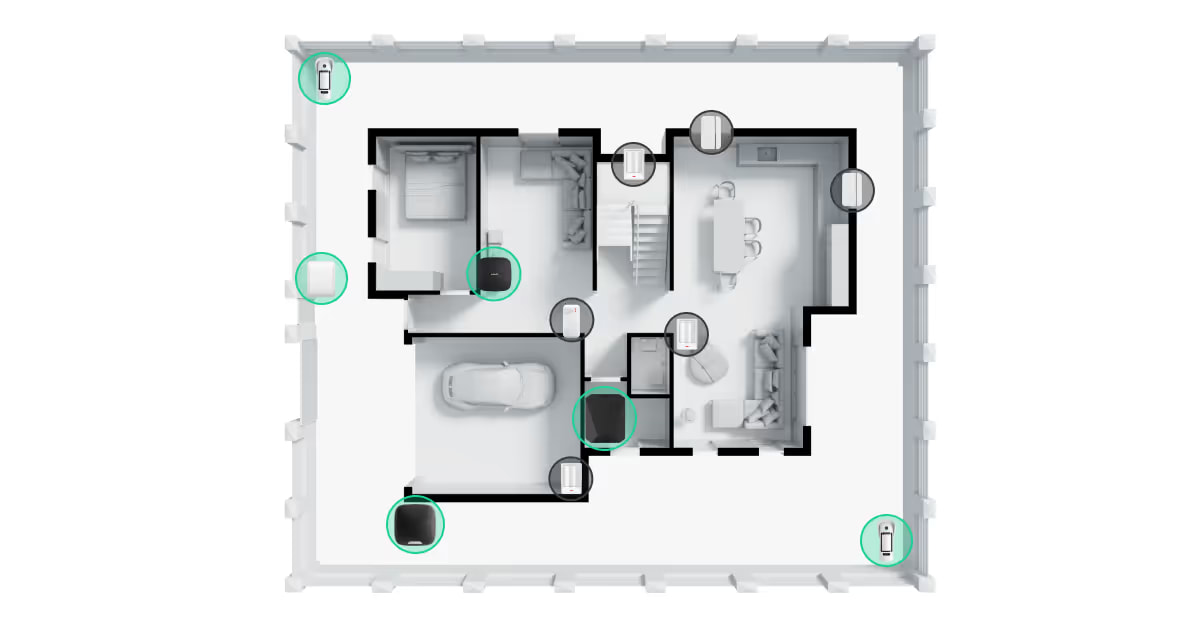
Not every old device should be kept. Components stay when they are in good physical condition, electrically compatible, correctly installed, and pass professional testing.
One firm exception: fire, smoke, carbon monoxide, and other life-safety devices are never reused just because they still power on. Their age, certification, local code requirements, and compatibility must be evaluated separately and an intrusion alarm upgrade does not replace a required code-compliant commercial fire alarm system.
The Most Important Step: Audit the System Before Buying Equipment
A strong wired alarm upgrade begins with an inspection, not with a product box.
The technician identifies every existing zone and determines what each wire controls. In an older installation, panel labels are frequently missing, inaccurate, or based on a layout that changed years ago. A zone marked "rear door" can lead to an unused contact, a renovated wall, or several devices spliced together.
A professional evaluation includes:
- Opening and documenting the existing control panel
- Identifying every connected device: contacts, motion detectors, glass-break sensors, sirens, keypads
- Testing cable continuity and finding shorts, ground faults, damaged insulation, corrosion, and hidden splices
- Checking detector power requirements and alarm contact types
- Determining whether multiple detectors share one zone
- Reviewing the property for areas the old system never protected
- Deciding which devices are reused, replaced, or supplemented
- Planning app control, backup communication, monitoring, cameras, and future expansion
This process prevents two expensive mistakes: discarding equipment that still has value, and keeping equipment that is no longer dependable.
Buying a home with an inherited alarm? Start with our home security checklist for new homeowners for the broader move-in tasks. For account control, monitoring status, and the equipment decision, see our guide to buying a house with an existing security system.
How Ajax Modernizes an Existing Wired Alarm
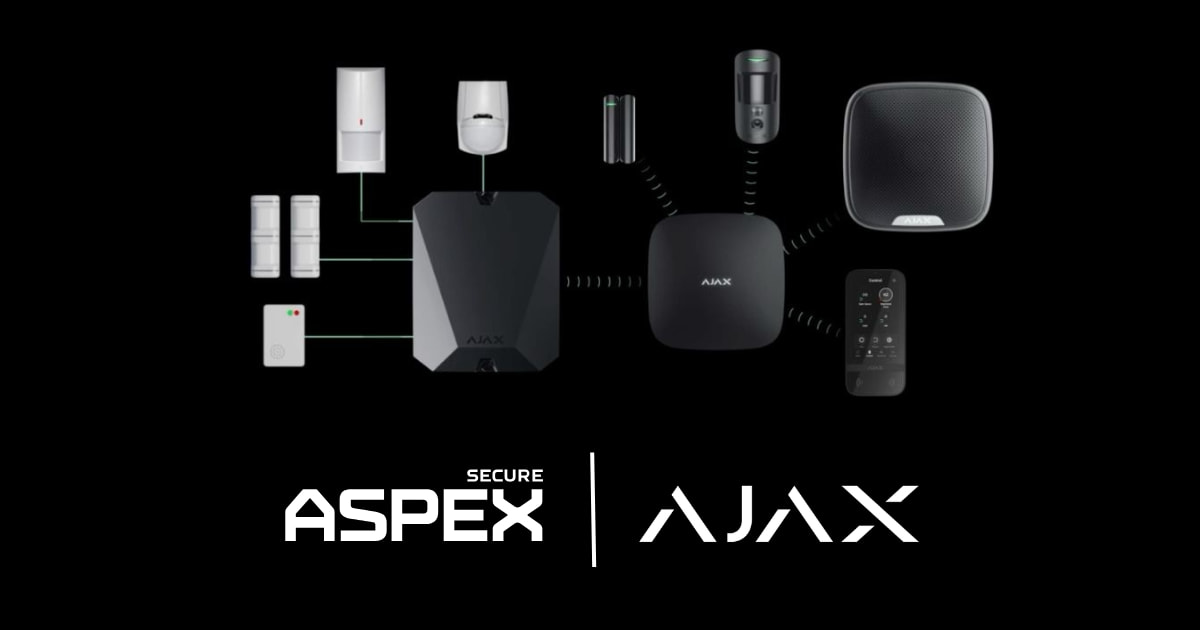
Ajax MultiTransmitter is the bridge between compatible third-party wired detectors and the Ajax ecosystem. It integrates up to 18 wired zones, so existing detectors report to a modern Ajax hub instead of the outdated panel.
The module itself is built for exactly this job. It can use a compatible 12 V backup battery, purchased separately; Ajax recommends a capacity of 4 Ah or 7 Ah. Runtime depends on the battery and connected load. The module can report power loss through the hub when an appropriate communication path remains available. Its battery does not provide backup power for the hub. Two tamper buttons detect any attempt to open the enclosure or pull the device off the wall. Each connected wired zone gets its own name, room, and alarm type in the Ajax app - so a 20-year-old door contact starts reporting like a modern device.
During the retrofit, the installer:
- Identifies and tests the existing wired zones
- Determines which detectors remain
- Removes the outdated control panel
- Connects compatible devices to MultiTransmitter
- Installs the Ajax hub
- Adds new Ajax wireless devices where coverage is missing
- Configures rooms, device names, alarm types, and users
- Tests alarms, faults, backup power, app notifications, and monitoring communication
The result is a hybrid security system: proven wired detectors stay in place, and Ajax becomes the central platform for control, communication, and expansion. MultiTransmitter exists precisely for this scenario - keeping the equipment that works while replacing everything the old panel couldn't do.
If the existing panel is a Honeywell Home or Resideo model, our comparison of Ajax with Honeywell security systems explains when moving to Ajax may make sense and when retaining serviceable VISTA infrastructure may be the more practical choice.
Why Ajax Is the Right Platform to Build Around
If you're going to replace the brain of your security system, the replacement should outlast the old one. That's the case for Ajax:
Professional-grade radio, not consumer Wi-Fi. Ajax devices communicate over Jeweller, an encrypted two-way radio protocol with a range of up to 1.2 miles in open space and frequency hopping that resists jamming. Wireless additions to your retrofit run on the same professional standard as the wired detectors they join - not on your home router.
Batteries measured in years. Some Ajax wireless detector models offer battery life of up to several years under specified conditions. Runtime varies by model, settings, activity, temperature, and radio conditions. Ajax supervises device status and can report low battery, tamper events, and communication loss. Notification timing depends on supervision settings and available connectivity. Regular battery review and system testing remain necessary.
Photo verification helps assess the alarm. MotionCam detectors can capture photos when the configured alarm condition occurs. With a supported transmission path, the images can help authorized users and a compatible monitoring service assess the event. Delivery time depends on image resolution, signal quality, connection method, and internet speed. Confirm photo verification support with the monitoring provider.
Certified to professional security standards. Specific Ajax intrusion devices are certified to the European EN 50131 standard at Grade 2, with select models certified to Grade 3-a higher security tier that may be used in some high-risk commercial and banking applications. Certification is model-specific, and the grade of the complete retrofit depends on the connected devices, system design, configuration, and installation. The Ajax platform can support homes, retail stores, and warehouses, allowing the system to expand as the property’s security needs change.
It keeps getting better. Ajax ships regular free firmware updates to hubs and devices. The panel you install this year gains features next year - the opposite of the abandoned panel you're replacing.
This is why ASPEX Secure builds on Ajax security systems rather than another platform: the retrofit isn't just a newer box, it's a foundation that won't be the obsolete component in 2040.
What Changes After the Upgrade
Mobile App Control
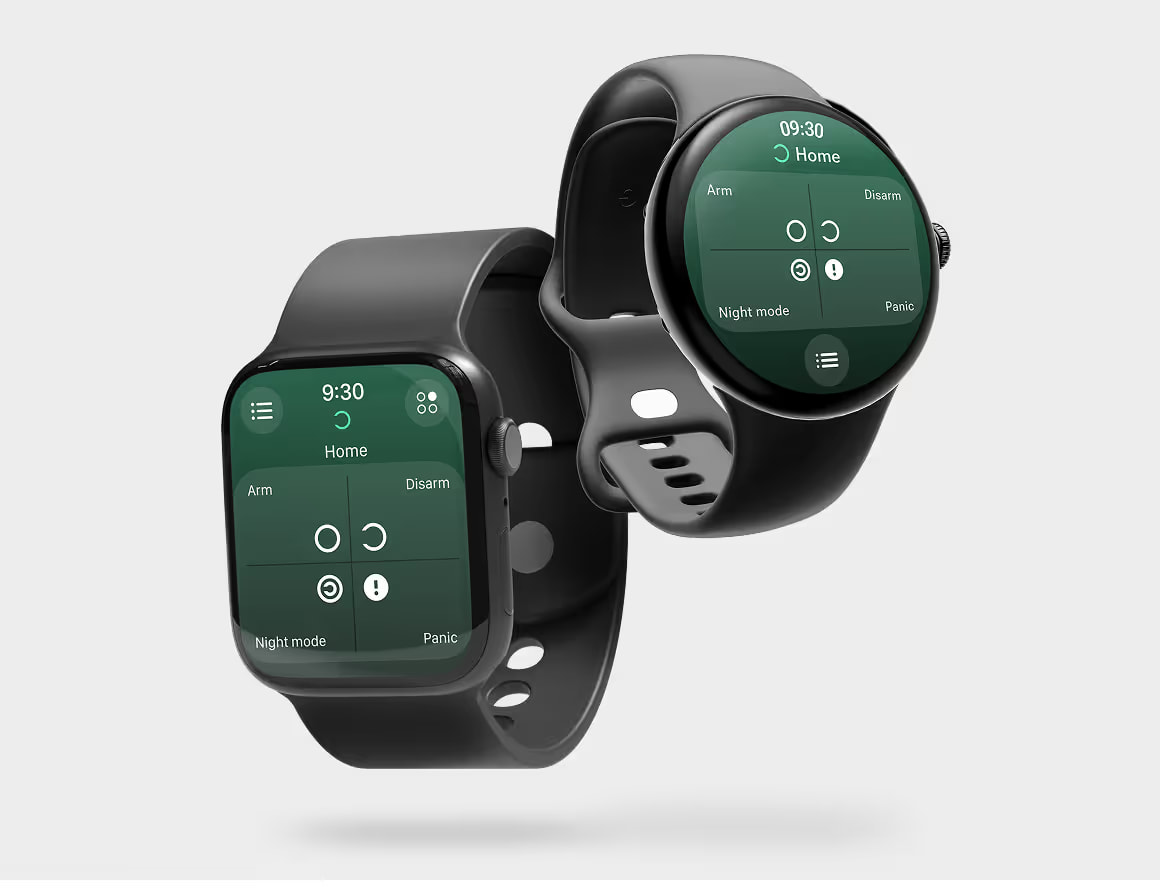
Arm and disarm the system, check device status, review events, and manage user permissions from the Ajax app. You no longer have to stand in front of a keypad to know what your system is doing.
Clear, Device-Specific Notifications
An old panel triggers a generic siren and displays a zone number. The upgraded system tells you exactly what happened:
- "Front Door Opened"
- "Motion Detected in Basement"
- "Glass Break - Living Room"
- "Panic Button Activated"
The monitoring center sees the same detail, which speeds up alarm verification and response.
Professional Monitoring
The upgraded system connects to professional alarm monitoring instead of relying on a local siren or on you noticing a phone notification. Self-monitoring remains an option - the difference is who acts when an alarm fires at 3 a.m. and you're asleep or out of town.
Backup Communication That Matters in Houston
An Ajax hub uses the communication paths supported by its model and configured for the installation. If broadband or the router fails, a supported hub may continue transmitting alarm events through a configured cellular data path while the hub and required devices remain powered and cellular service is available.
This matters during Houston storms, when local broadband may be interrupted. The backup path and monitoring receipt should be tested for the property. For a deeper look at outage behavior, see how security systems handle power and internet outages in Houston.
Automation
After the upgrade, your 20-year-old door contact can do things it was never built for: trigger the porch light when motion is detected after dark, cut power to a space heater through a smart relay when you arm the system, or switch the whole house to Night Mode with one tap.
The old panel detected events. The new system responds to them. Automation is designed around real needs during system configuration - not added because the feature exists.
Wireless Expansion
Existing wires only protect the places they already reach. New Ajax wireless devices extend protection to areas the original installer never wired:
- Detached garages
- Driveways and gates
- Backyards and patios
- Renovated rooms and additions
- Stockrooms and equipment areas
- Water-leak risk zones (water heaters, laundry rooms, under sinks)
No new cable, no opened walls.
A Hybrid System Beats a Forced All-or-Nothing Choice
Property owners are often told to pick either a fully wired system or a completely wireless one. In a retrofit, that framing is wrong. A hybrid system uses the best option in each part of the property.
For a broader comparison, see our guide to wired, wireless, and hybrid security systems for Houston properties. The lesson is the same: reliability comes from the complete system design, not from whether a detector has a cable.
When Reusing Wired Sensors Makes Sense
A retrofit is the right call when:
- The property has extensive concealed alarm wiring in good condition
- Door and window contacts operate consistently
- Existing detectors pass testing and have no false-alarm history
- Rewiring would mean opening finished walls, ceilings, or architectural surfaces
- The property is occupied and disruption must stay minimal
- A business needs to upgrade in stages instead of closing for a full replacement
This applies to larger Houston homes with finished interiors, offices, retail stores, restaurants, warehouses, and historic properties with dozens of existing alarm points. For businesses, the retrofit should be planned as part of a complete commercial security system, not as a panel swap alone.
When Replacement Is the Better Decision
Keeping an old detector to save its replacement cost creates service problems later. Devices and wiring get replaced when:
- Cables are damaged, corroded, brittle, or impossible to identify
- Multiple unrelated detectors share one zone with no event detail
- Sensors fail testing or produce inconsistent results
- Power requirements are incompatible with the new platform
- Renovations changed doors, windows, or room layouts
- Life-safety devices have reached their replacement age
- Troubleshooting the old installation costs more than installing new devices
- The owner wants photo verification or capabilities the old detector cannot provide
The strongest plan is rarely "save everything" or "replace everything." It's a documented decision for each device, cable, and room. For homes, that decision is built into a professionally designed residential security system; for businesses, into the broader commercial design.
Can the Upgraded System Include Cameras and Photo Verification?
Yes. Reusing wired intrusion detectors doesn't limit visual verification. An upgraded design combines existing wired contacts, Ajax MotionCam devices that send a photo series the moment motion triggers an alarm, indoor and outdoor cameras, and app-based live viewing. Existing wired cameras recording through an NVR can keep working alongside the new system.
Sensors detect the event. Photo verification can help authorized users and a compatible monitoring service assess its cause when images are available. It does not guarantee identification or a specific response time.
Why Professional Installation Matters for a Retrofit
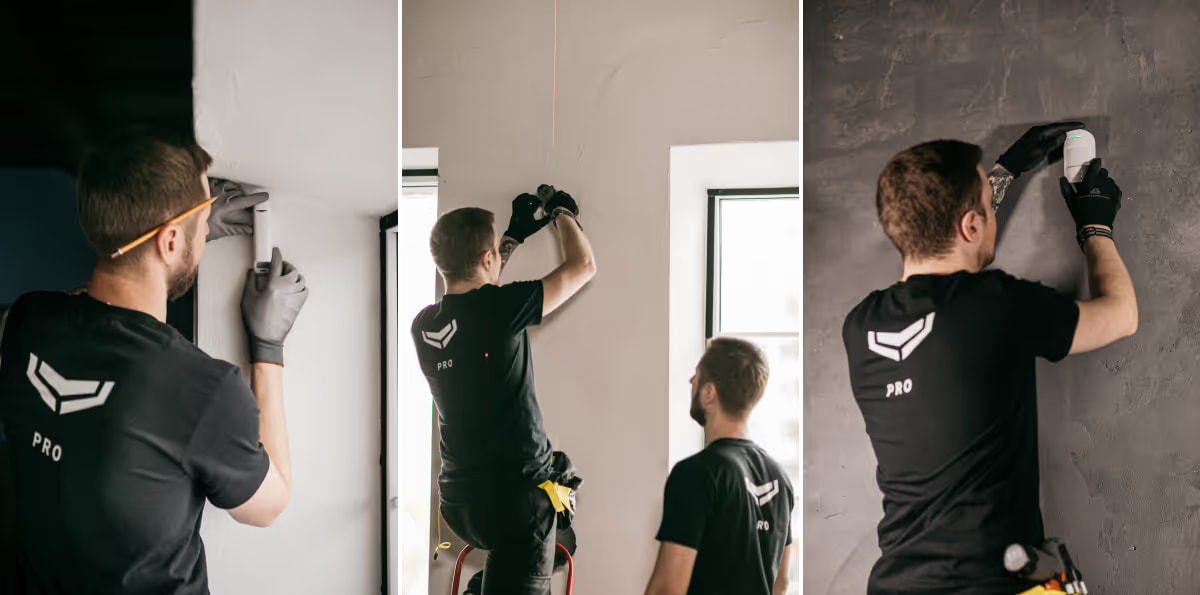
A hybrid alarm renovation is not the same as mounting a few wireless sensors. The installer has to understand the existing wiring, contact types, power consumption, resistor configuration, tamper circuits, zone behavior, communication paths, and monitoring workflow. Incorrect wiring or programming silently breaks the exact things the upgrade was supposed to fix: alarms, tamper events, and fault reporting.
Professional installation answers questions a spec sheet can't:
- Is this cable dependable, or does it have a hidden splice behind drywall?
- Should one shared zone be split into individual devices?
- Does the old siren draw too much current for the new platform?
- Is the cellular signal adequate at the hub location?
- Does the monitoring center receive the correct event codes?
- What happens during a power, internet, or equipment failure?
ASPEX Secure provides professional security system installation for homes and businesses in Houston and surrounding areas. As an Ajax Systems Authorized Partner, ASPEX Secure tests the existing equipment, identifies reusable components, designs the upgraded system, configures the Ajax app, verifies communication, and connects compatible systems with monitoring options.
Upgrade the System - Not Just the Metal Box
A successful alarm renovation preserves what works and fixes what doesn't. The goal isn't replacing one control box with a newer one. It's a professionally designed security system with clear notifications, mobile control, backup communication, monitoring readiness, full coverage, and room to grow.
Don't tear out a complete wired installation before finding out what part of it still has value.
Request a professional security system assessment - ASPEX Secure will inspect your current system, test the detectors and wiring, and tell you honestly whether a hybrid upgrade or a full replacement is the better fit for your Houston home or business.